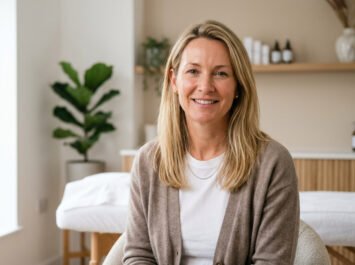
This blog covers what happens during your consultation, medical and facial assessments and different non-surgical treatment options. Ready to learn more? Book a consultation here.

An aesthetic facial consultation is a dedicated one-to-one discussion focused on exploring your aesthetic goals and evaluating facial balance. During this appointment, your practitioner examines your facial structure, discusses specific concerns, and reviews appropriate non-surgical options in detail.
Whether you are considering softening fine lines, restoring lost facial volume, or improving overall skin texture, this first meeting provides clear guidance. It allows you to understand how different treatments work, what results are realistic, and how to plan treatments safely.
Why starting with an aesthetic facial consultation matters
Many people begin researching aesthetic treatments with a specific procedure in mind. However, the root cause of a cosmetic concern is often located in a different area of the face than where lines or shadows appear.
For example, deepening nose-to-mouth folds often stem from natural mid-face volume depletion rather than changes in the lower face alone. A professional assessment helps identify these underlying structural shifts so you receive recommendations that address the cause rather than just the symptom.
Booking a dedicated discussion also protects your safety and peace of mind. It ensures you have space to ask questions, understand product suitability, and reflect on your options without feeling rushed into making an immediate decision.
What happens during your consultation appointment
Every clinic structure varies slightly, but a thorough, professional assessment follows a clear clinical process designed around your individual needs.
1. Medical history and lifestyle review
Your appointment begins with a comprehensive health assessment. Your practitioner will ask about:
- Current medications and supplements that might increase bruising or affect healing.
- Past aesthetic treatments, including dates, product types, and your previous experiences.
- General health conditions, allergies, and any recent dental work or immunisations.
- Daily skincare habits, sun exposure, and lifestyle factors that influence skin health.
This background check ensures that any suggested treatments are clinically appropriate and safe for you.
2. Exploring your personal priorities
Next, you will discuss what prompted you to book an appointment. You might notice that your skin feels dull, or that certain areas look tired even when you are well rested.
We encourage you to describe how you feel rather than focusing strictly on technical procedures. Explaining that you want a refreshed look or firmer-feeling skin helps your practitioner match treatments to your everyday expectations.
3. Visual and dynamic facial assessment
Your practitioner will examine your face from multiple angles, both at rest and during expression. This includes assessing:
- Upper face dynamics: How expressions create movement and where natural creases form.
- Mid-face support: Volume across the cheeks and beneath the eyes, which supports the lower face.
- Lower face contours: Definition along the jawline, chin projection, and the corners of the mouth.
- Skin quality: Hydration levels, surface texture, elasticity, and pore appearance.
Understanding how your facial muscles interact ensures that any recommended procedures maintain natural movement.
4. Discussing your treatment options
Once the assessment is complete, your practitioner outlines suitable non-surgical options. They will explain how specific products work, what each session involves, expected recovery times, and how long outcomes generally last.
If you have common aesthetic concerns across several areas, your practitioner can explain how combining therapies over multiple visits provides a harmonious, balanced result.
| Assessment stage | What we evaluate | Why it matters |
|---|---|---|
| Medical screening | Health conditions, medications, allergies | Ensures safety and suitability for procedures |
| Structural review | Bone support, fat distribution, facial symmetry | Identifies the root cause of hollows or folds |
| Dynamic assessment | Muscle movement during speech and expression | Preserves natural, balanced facial animation |
| Skin evaluation | Hydration, elasticity, fine lines, texture | Guides choices between dermal fillers and skin boosters |
Exploring non-surgical treatment categories
During your appointment, your practitioner may discuss various treatment modalities depending on whether your goals relate to structural volume, skin conditioning, or cellular renewal.
Hyaluronic acid dermal fillers
Dermal fillers use smooth hyaluronic acid gels to replace lost structural volume and define facial contours. Depending on your needs, options may include:
- Cheek support: Replenishing mid-face volume to improve cheekbone definition and gently support the lower face.
- Tear trough smoothing: Softening under-eye hollows to reduce the appearance of persistent shadows.
- Lower face definition: Placing filler along the chin or jawline to enhance profile balance.
- Line softening: Supporting areas around the nose and mouth, such as nasolabial folds and marionette lines.
Dermal filler results are visible straight away, settling fully over approximately two weeks, and typically last between 6 and 18 months depending on the treated area.
Skin boosters and deep hydration
If your primary goal is improving skin texture, dullness, or crepey skin, injectable skin boosters may be suggested. Formulations deliver concentrated hyaluronic acid into the dermis to stimulate natural collagen and restore moisture balance.
Skin booster treatments usually require an initial course of two to three sessions spaced two to four weeks apart. Results develop over two to four weeks, leaving the skin feeling firmer, plumper, and deeply hydrated.
Regenerative polynucleotides
Polynucleotides work at a cellular level to encourage tissue repair and stimulate collagen synthesis. Derived from natural bio-active molecules, they are particularly helpful for delicate areas like the under-eyes or neck where thin skin shows early crepiness. A typical course involves three sessions spaced several weeks apart, with gradual improvements in skin strength appearing over four to eight weeks.
Collagen-stimulating bio-stimulators
For broader volume loss and skin laxity, bio-stimulatory injectables work gradually within the deeper dermis. These treatments act as a scaffold to prompt your own collagen production over two to three months, offering subtle, structural restoration that can last up to two years, although individual results vary.
Planning ahead for gradual, balanced results
Scheduling your assessment early allows you to plan multi-step courses, such as skin boosters or microneedling with skin booster infusion, with plenty of time for results to develop.
Spacing treatments appropriately gives the skin time to respond, collagen production time to build, and any minor post-treatment swelling time to settle naturally.
What to ask during your consultation
To make the most of your appointment, consider bringing a list of questions. A good practitioner will welcome your curiosity and take time to provide clear, thorough answers.
- Which specific treatments do you recommend for my goals, and why?
- How many sessions will I need, and what is the recommended timeline between them?
- What common side effects should I expect, and what is the typical recovery period?
- What happens if I decide not to proceed with treatment today?
- How can I contact the clinic if I have questions following my appointment?
Important safety and risk considerations
All non-surgical injectable treatments carry potential side effects. Common temporary reactions include mild redness, swelling, tenderness, small bumps at injection points, and localised bruising, which usually settle, and your practitioner will advise on recovery. Less common risks include delayed lumps or nodules, which should always be reviewed by your practitioner. Rare but serious complications, such as accidental vascular occlusion, require immediate attention. Always ensure your chosen clinic provides clear aftercare instructions and emergency contact support.
Arranging your consultation in Beaconsfield
Taking time to explore your options in a calm, professional environment is the most reliable way to achieve subtle, natural-looking results. At our clinic in Beaconsfield, we offer dedicated consultations to review your facial harmony and discuss appropriate non-surgical options. Whether you are exploring treatment for the first time or reviewing your existing skincare routine, get in touch with us to arrange your one-to-one consultation.
Frequently asked questions
How long does a facial consultation take?
A dedicated consultation usually takes between 30 and 45 minutes. This provides ample time to review your medical history, complete a facial assessment, and discuss your goals without feeling rushed.
Do I have to get treated on the same day as my consultation?
No, there is never any obligation to have treatment on the same day. Taking time to review your options and consider your treatment plan is an important part of making an informed decision.
How should I prepare for my consultation appointment?
Arrive with clean skin free from heavy makeup if possible, and bring details of your current skincare products and any daily medications. Having a clear idea of your main concerns will also help guide the discussion.
Can I discuss multiple treatment areas during one appointment?
Yes, we look at your facial balance as a whole rather than treating areas in isolation. Discussing your overall goals allows us to recommend a cohesive plan that addresses volume, lines, and skin quality together.
About the author

Kelly Swann, Level 5 aesthetics practitioner, Level 3 Award in Teaching and Education and Sculpt Aesthetics Founder · Sculpt by Kelly Swann Aesthetics Clinic
This article is for general information only and is not medical advice. Suitability for any treatment is confirmed at a consultation with a qualified practitioner.